Build what people actually want to buy
Customer Discovery is a structured research engagement for founders and product teams who need to validate what they’re building — or what they’re about to build. We conduct the interviews, map the research, and surface the insights that tell you whether you’re solving the right problem, for the right people, in the right way. So that when you build (or pitch, or launch), you’re not guessing.
Book a discovery call to find out if this is the right project for where you are.
Trusted by over 100+ SaaS businesses with their toughest product challenges

The gap between a good idea and a product people will actually use
Most founders start with conviction. They’ve seen the problem firsthand, heard it from friends in the industry, or lived it themselves. That conviction is useful — it got you to build something. But conviction alone doesn’t tell you who the product is really for, what job they’re hiring it to do, or what would make them choose you over every other option (including doing nothing).
The founders who skip this work tend to end up in the same place: months into building, and suddenly uncertain why the wrong people are signing up, why activation is lower than expected, or why the pitch isn’t landing. Not because the idea was bad — but because it was never pressure-tested against reality.
The challenge is that by the time those signals show up, they’re expensive to fix. You’ve already built features based on assumptions that turned out to be wrong. You’ve already hired around a positioning that doesn’t resonate. You’ve already pitched investors on a market size and a buyer that doesn’t quite match who’s actually raising their hand.
Customer Discovery exists to close that gap before it opens. It’s a research engagement designed to pressure-test your assumptions, validate your direction, and give you a clear, evidence-backed picture of who you’re building for and why they’ll care.
Whether you’re pre-product, pre-funding, or at a fork in the road on your product strategy, this project gives you the foundation to move with confidence.
Who is the Customer Discovery Project for?
Customer Discovery is built for pre-product founders, venture studios, and product and UX leaders who are staring down one of these situations:
You're about to build something new
And you want to validate the problem, the audience, and the opportunity before committing serious time or money to development
You're preparing for a fundraise
And you need evidence from the market to support your thesis, not just a compelling narrative
You're not sure if you're solving the right problem
You have early signal but the “why” behind the behavior isn’t clear yet
You're a venture studio or accelerator
Building multiple products and need a repeatable, rigorous discovery process to de-risk each bet
You're a product or UX leader
Stepping into a new role or evaluating a new market segment, and you need a fast, structured way to build your foundation
Words of love from a design studio we partner with 👇
“I have been working with a mutual SaaS client on usability testing and feature/improvement roadmap so I’ve spent a lot of time in the research that DemandMaven prepared for them.
You guys do amazing work – I was really impressed.”
How we approach Customer Discovery
Most teams treat discovery as a one-time activity — a few calls in the early days, a couple of informal conversations with friendly users, and a rough hypothesis they carry forward indefinitely. That’s not discovery. That’s confirmation bias dressed up as research.
Our approach is systematic. We design the research to answer specific questions, not general ones. And we combine what people tell us with what the available context shows us — so the output is grounded in evidence, not just anecdote.
Step 1: Define the research objectives
Before a single interview is scheduled, we get clear on what you actually need to know. What assumptions are you trying to validate? What decisions hinge on this research? What would change if we found out the market doesn’t work the way you think it does? The research objectives shape everything that comes next — the methodology, the participant criteria, the questions we ask.
Step 2: Design the research strategy
Not every question needs the same methodology. We’ll determine the right mix based on your goals. That might be JTBD switch-style interviews to understand the forces that drive people to seek out a solution like yours. It might be ODI-style jobs mapping to understand the full ecosystem of outcomes your customer is trying to achieve. It might be UX interviews to understand how people currently navigate the problem space. Often it’s a combination. We design the strategy first so the research actually answers the right questions.
Step 3: Recruit and conduct interviews
We handle participant recruitment and interview execution. Depending on your product and stage, participants may come from your existing waitlist, audience, or network — or we’ll source them through research panels. Interviews are conducted by experienced researchers who know how to dig past surface-level answers and get to the actual motivations, trade-offs, and decision-making patterns that matter.
Step 4: Analyze and synthesize
Raw interview data isn’t insights. We go through every interview, identify patterns across participants, surface contradictions, and build a structured picture of what we found. This is where we separate signals from noise and start forming the hypotheses that will drive your product and GTM decisions.
Step 5: Map opportunities and test assumptions
Depending on your goals, we’ll translate the research into an opportunity map, a jobs map, a user story framework, or a product roadmap input — whatever format is most useful for where you’re headed. If the goal is funding, we’ll make sure the output speaks to investor questions. If the goal is product direction, we’ll make sure the output speaks to your product and design team.
Note on prototyping & design
We don’t do prototyping or high-fidelity design work, but we work well alongside existing product and design teams. We have trusted partners we refer for design and development when it’s needed. What we can tell your designers is exactly what the user is trying to accomplish, where they’re getting stuck, and what would make the experience click.
What you walk away with
At the end of an Customer Discovery Project, you’ll have:
INCLUDED
Research objectives and hypothesis documentation — a clear record of the assumptions you went in with and how the evidence confirmed, challenged, or reframed them
Interview recordings and transcripts — full documentation of every conversation, so nothing is lost and your team can go deep on any finding
JTBD Brief — a structured summary of the jobs your customers are hiring your product to do, including the functional, emotional, and social dimensions of each job
Opportunity Map — a prioritized view of the biggest unmet needs and underserved outcomes in your target market, with direct connections to product and GTM implications
User story map or jobs map (ODI-style, where applicable) — a visual framework that captures the full scope of outcomes your customer is trying to achieve at each phase of the job
Product roadmap inputs — synthesized research findings your product and design teams can use directly to inform what to build next and in what sequence
Positioning and messaging recommendations — specific guidance on how to talk about what you’re building in a way that resonates with the people you’re building it for
ADD-ONS
Pricing strategy that dives deep into what your customers value about your product and how to monetize them for long-term growth
Pricing page design and composition to prototype ideas quickly
Marketing strategy. Instead of spraying scattershot, use your budget on the channels that earn the most ROI
Website strategy. Site not doing your SaaS justice? You wouldn’t be the first…
Growth roadmapping. Understand which steps to prioritize and choose the people & tools to get you there
Product discovery. Prioritize features on your roadmap that don’t just keep customers but have them banging down your door for more.
“We hired DemandMaven to conduct market research as we started building the MVP of our product and I couldn’t be more relieved that we did. They painstakingly combed through every single interview, extracted the insights that we needed, validated what we already knew, and helped us think through what wasn’t validated to form new hypotheses instead. Based on what we gathered and the quality of the insights, I’m a huge fan.”
Work with a growth-obsessed SaaS customer discovery consultant
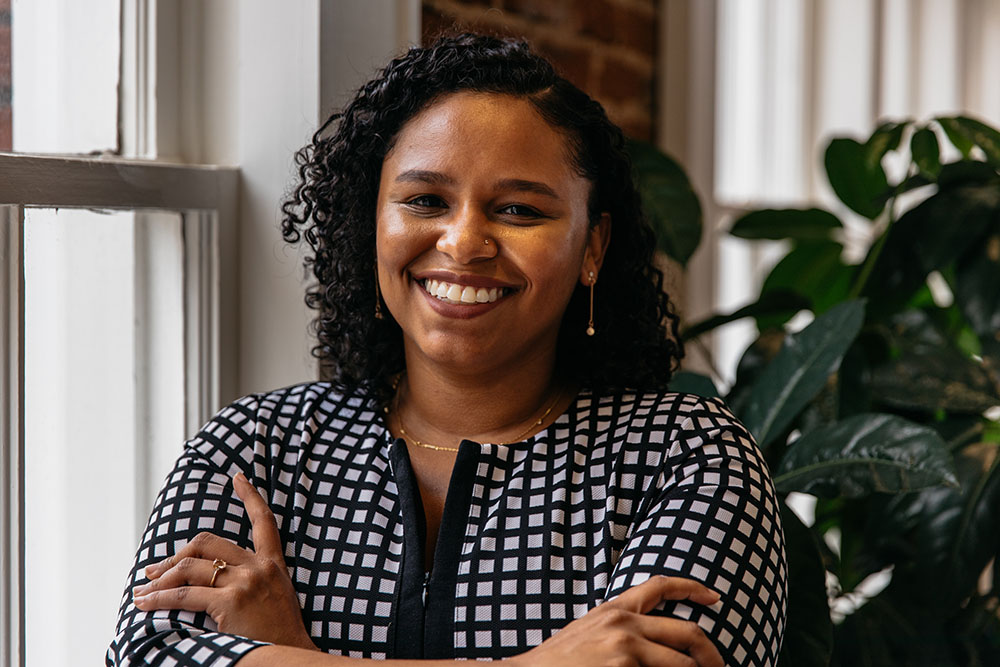
DemandMaven was founded by lead growth strategist Asia Orangio in 2018. Along with her work here, Asia advises SaaS companies and VC funds all over the world. She’s also a TinySeed mentor, and served on the board at Moz before its successful acquisition in 2021.
Before starting DemandMaven, Asia worked for two VC-funded, high-growth startups in Atlanta, GA as head of marketing and head of demand generation.
☝️ All that is to say that when you decide to work with DemandMaven, you’re getting a team who really gets SaaS.
Experienced in both B2B and B2C markets
Understand GTM strategies for a variety of product-led growth and sales-led models and market segments including: freemium, self-serve, demo, and SMB / mid-market / enterprise
Battle-tested in both VC-funded and bootstrapped funding environments
Deeply experienced with proven SaaS frameworks that generate results

FEATURED ON









Frequently Asked Questions

What does the entire process look like from start to finish?
Great question!
A typical Customer Discovery project runs 5–6 weeks from kickoff to final workshop, but can run a little longer depending on your needs.
Week 0: Onboarding, research objective setting, and participant criteria definition
Week 1: Research strategy design, interview guide development, participant outreach
Week 2: Data gathering, audit of any existing materials, initial interviews begin
Week 3: Interviews + live de-briefs and initial pattern analysis
Week 4: Overflow interviews, deeper synthesis, opportunity mapping
Week 5: Final deliverables, readout, and workshop to translate findings into decisions
How is this different from the Growth Engagement?
The Growth Engagement and GTM Engagement are both designed for companies that already have a product in market. They combine qualitative research with quantitative analysis of your actual product, marketing, and subscription data. Customer Discovery is specifically for earlier-stage work — validating what you’re building before you build it, or understanding your market before you’ve defined your go-to-market.
If you have a product and revenue and you’re trying to figure out why growth is slow or stalling, the Growth Engagement is the right starting point.
How many interviews do you do?
It depends on your goals and the complexity of your market. There’s no preset number. Some projects need 10–12 interviews to reach saturation on the key questions. Others need more if you’re covering multiple buyer segments or testing significantly different use cases. We’ll scope the right number based on what we’re trying to learn and finalize it during project kick-off.
Who does the work?
Asia, our fearless leader, leads every project and conducts the interviews. We don’t outsource research to junior team members or subcontractors. You’re working directly with someone who has done this across more than 100 SaaS companies.
Do you do prototyping or design work?
We don’t. Our work stops at the research and strategy layer — we’ll tell you exactly what to build and why, but traditionally we like to work with product and design teams on execution. We’ll sometimes provide low-fidelity comps to communicate specific design ideas if that’s a need, but highly dependent on the context.
We work well alongside existing product and design teams, and we can connect you with trusted partners for prototyping and high-fidelity design work if you need it.
How much does it cost?
Customer Discovery starts at $15,000. The final investment depends on scope, number of interviews, and any add-ons. Many clients pay around $20-25k all-in.
Book a discovery call to walk through your situation and figure out the right scope.
You ready to finally figure out how to do pricing the right way?
Most SaaS companies don’t find out which one until it’s already costing them.
A Pricing Project gives you the data to make confident decisions — about what to charge, how to structure your plans, and how to design for the expansion revenue your business needs to grow.